Meet the team
Main programme team

Dr Ewan Carr
Programme Lead

Dr Cedric Ginestet
Programme Lead

Dr Chris Mackin
Teaching Fellow

Miss Zahra Abdulla
Education Lead
Subject experts

Professor Richard Dobson
A leader in health informatics, bioinformatics and mobile health platforms. Richard’s research develops data and AI for the NHS, including CogStack, a platform supporting clinical decisions that produced multiple spinouts and startups. His team developed the award-winning RADAR-Base platform, which collects and analyses data from wearables.

Professor Daniel Stahl
Specialises in clinical prediction modelling at the intersection of statistics, health informatics and clinical research. His work applies statistics and machine learning to electronic health records, clinical trials and cohort studies to improve healthcare outcomes. He leads the BRC Prediction Modelling group and helps develop tools for early detection of psychosis and depression.

Professor Ben Carter
Specialises in clinical trials and statistical methodology, advancing how studies are designed and analysed in psychiatry and neurology. He leads the Mental Health & Neuroscience Clinical Trial Statistics Group, supporting high-impact research that strengthens the evidence base for clinical care.

Dr Nicholas Cummins
Applies AI, machine learning, and speech analysis to understand mental and physical health through voice and behaviour. His research focuses on responsible AI, digital biomarkers, and multimodal health data, bridging cutting-edge technology with real clinical impact.

Professor Angus Roberts
An expert in natural language processing and health data science, developing methods to extract insights from unstructured clinical text and electronic health records. His work enables large-scale, real-world research that supports better decision-making in healthcare.
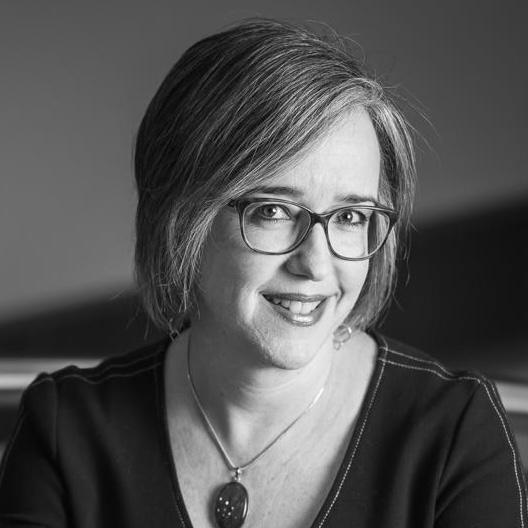
Professor Kimberley Goldsmith
Specialises in the design and analysis of complex clinical trials in mental health and neuroscience. Her methodological research addresses mediation, moderation, and missing data, helping researchers draw reliable conclusions from studies.

Professor Alfredo Iacoangeli
Specialises in bioinformatics, neurogenomics and machine learning. He develops computational tools to analyse large-scale omics and clinical datasets, advancing our understanding of neurological and psychiatric disorders through data-driven discovery.

Professor Sabine Landau
is a leading expert in causal inference and statistical methods for developing and evaluating complex interventions, particularly in mental health research. Her work improves how we design, analyse and interpret clinical trials or observational studies to uncover how and why treatments work.
Dr Ewan Carr
Specialises in predictive modelling, longitudinal data analysis, and causal inference applied to mental and physical health. His research aims to apply novel statistical analysis and techniques to understand treatment effects and unpick interactions between mental and physical health.
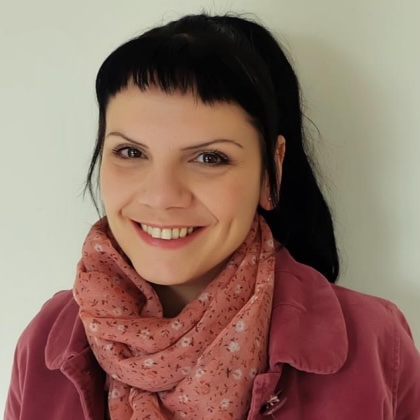
Dr Silia Vitoratou
Specialises in methods used in psychometrics to better measure latent variables and psychological constructs. She works on the development of innovative tools for assessing complex traits and mental health conditions, ensuring that data truly capture human experience.

Professor Richard Emsley
Develops and applies advanced statistical methods for the design and analysis of randomised trials and longitudinal studies. His work focuses on implementing efficient trial designs to evaluate new treatments and using causal modelling to strengthen the reliability of mental health and biomedical research.
Dr Zina Ibrahim
Focuses on explainable AI, data governance, and reproducible analytics in healthcare. She works on making complex data science methods transparent and trustworthy, empowering clinicians and researchers to use AI safely and effectively.

Dr Nick Beckley-Hoelscher
Applies statistical modelling and data science to mental health, precision medicine, and digital health. His research explores how advanced analytics and computational tools can improve diagnosis, treatment, and outcomes across diverse patient populations.
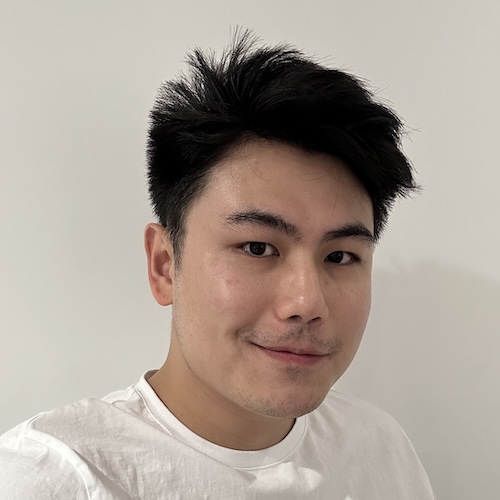
Dr Taiyu Zhu
Works with statistical genetics, bioinformatics, and machine learning to uncover the genetic architecture of complex traits and diseases. He develops and applies computational approaches that translate genomic data into insights for personalised medicine.

Dr Yamiko Msosa
Applies artificial intelligence and data science to health informatics and global health, developing analytical methods that enhance healthcare systems, promote equity, and translate complex data into actionable insights for real-world impact.

Dr Raquel Iniesta
Specialises in machine learning for precision medicine, with a focus on creating transparent, fair, and ethical predictive models in healthcare. Her work combines advanced statistical learning and topological data analysis to support treatment personalisation, particularly in depression and hypertension, while also addressing ethical challenges of AI in clinical practice.

Professor Ioannis Bakolis
Applies statistical and data science methods to public mental health, exploring how environmental and social factors influence wellbeing and developing evidence to inform policy, improve services, and promote healthier communities.
Dr Cedric Ginestet
is a lecturer in biostatistics with expertise in Bayesian statistics, network analysis, neuroimaging and causal modelling. Cedric has twenty years of experience in teaching statistics to a broad range of audiences, ranging from students in psychology and psychiatry using SPSS to students in mathematics and computer science using R.

Dr Amos Folarin
Leads software development for digital health research, applying computational biology, software engineering and data science to build innovative platforms. His work focuses on remote monitoring using wearables, alongside projects in infectious disease surveillance and deep-learning image analysis for high-content screening.

Dr Zulqarnain Rashid
Specialises in digital healthcare and assistive technologies using connected devices and mobile platforms. He leads multidisciplinary projects collecting and analysing data from wearables and smartphones across diverse conditions, with a focus on accessibility, independent living, and personalised healthcare solutions.

Miss Zahra Abdulla
(SFHEA) is a leader in education, biostatistics, and higher education practice. She applies pedagogic expertise to enhance learning, advance equity, and employability, Zahra leads innovation in curriculum design and inclusive education that fosters confidence, belonging, and success for students and enhances education practice among staff.
Dr Christopher Mackin
Specialises in evolutionary biology, statistics education, and quantitative learning. He is passionate about making R software accessible and meaningful, fostering student confidence, and promoting inclusive, research-informed approaches to quantitative learning.